Address
Brass next to White House Hotel, Addis Ababa
Work Hours
Monday to Friday: 9am – 5pm
Sat: 9am – 1pm
Address
Brass next to White House Hotel, Addis Ababa
Work Hours
Monday to Friday: 9am – 5pm
Sat: 9am – 1pm


Climate change is not a distant threat—indeed, for Ethiopia, climate action is already shaping lives across the nation. From shifting rain patterns to food shortages, its impacts are real and urgent. Consequently, SDG 13: Climate Action calls for immediate efforts to reduce emissions and protect communities. Simply put, Climate Action refers to the urgent steps needed to combat climate change and its impacts. Therefore, Ethiopia is rising to the challenge with a strong sectoral plan that turns problems into powerful solutions for climate action.
Agriculture is Ethiopia’s largest economic sector. However, that also makes it one of the most vulnerable. In its sectoral plan, Ethiopia Climate Action promotes climate-smart agriculture to increase food production while protecting the environment. This comprehensive approach includes using drought-resistant seeds, water-saving techniques, and land restoration projects to reduce soil erosion.
For example, in regions prone to water scarcity, drip irrigation systems are being adopted. These systems enable farmers to cultivate resilient crops even with less rainfall, thereby securing livelihoods and food supplies. Studies show drip irrigation can result in water savings of up to 55% and labor savings of 58% compared to traditional flood irrigation systems, significantly boosting crop quality and yield. Furthermore, on-farm evaluations in Western Oromia have demonstrated that drip irrigation can enhance coffee yield by 65% and water use efficiency by 60% when compared to non-irrigated coffee.
For example, in regions prone to water scarcity, drip irrigation systems are being adopted. These systems enable farmers to cultivate resilient crops even with less rainfall, thereby securing livelihoods and food supplies. Studies show drip irrigation can result in water savings of up to 55% and labor savings of 58% compared to traditional flood irrigation systems, significantly boosting crop quality and yield. Furthermore, on-farm evaluations in Western Oromia have demonstrated that drip irrigation can enhance coffee yield by 65% and water use efficiency by 60% when compared to non-irrigated coffee.
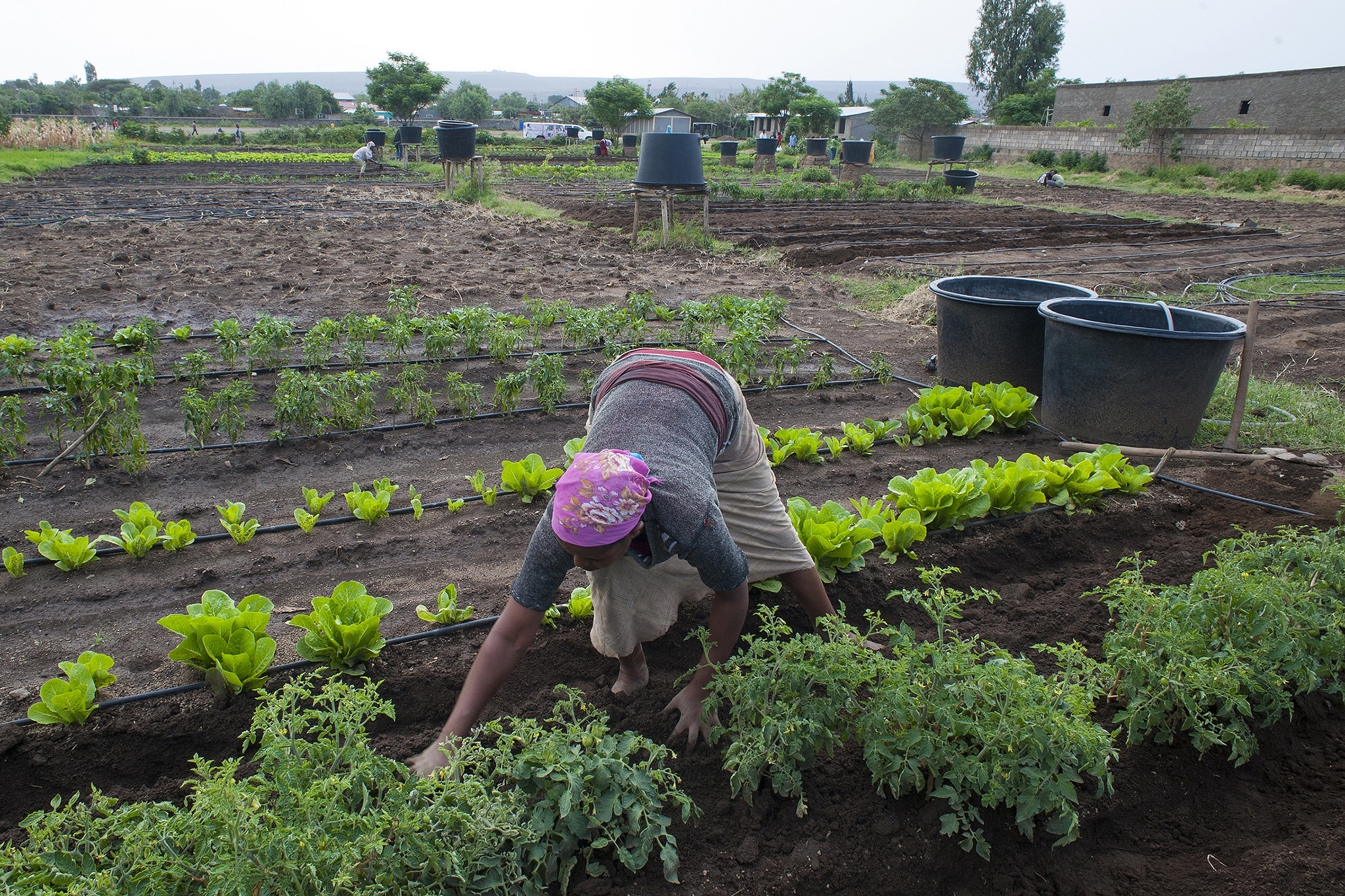
[Image 1: A young Ethiopian farmer tending to plants with a drip irrigation system visible in the foreground. Photo Credit: Adaptation-fund.org ].
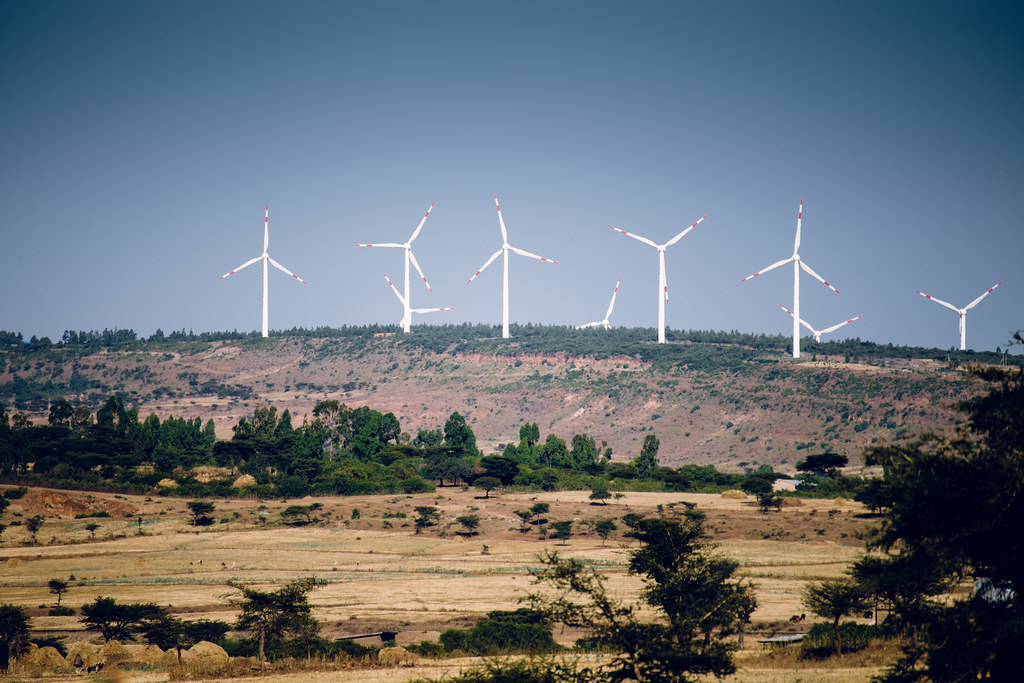
The energy sector plays a key role in reducing emissions. Ethiopia is investing in renewable energy sources, especially hydropower, solar, and wind. The Green Legacy Initiative is also part of this effort, helping offset carbon by planting billions of trees. Crucially, clean energy doesn’t just help the planet—it also powers schools, health centers, and businesses across rural areas, contributing directly to Ethiopia Climate Action goals.
Consider, for instances, how new solar mini-grids are bringing electricity to remote health clinics, improving medical services and enabling longer operating hours. The Ethiopia Electrification Program (ELEAP), in fact, has already supported the installation of 11 mini-grids, bringing electricity to nearly 20,000 people in isolated communities. In addition, the Ministry of Water and Energy aims to connect at least 100 rural towns with solar mini-grids in the current financial year. They have also distributed 345,520 various solar power technologies benefiting up to 1.6 million people, primarily for household use.
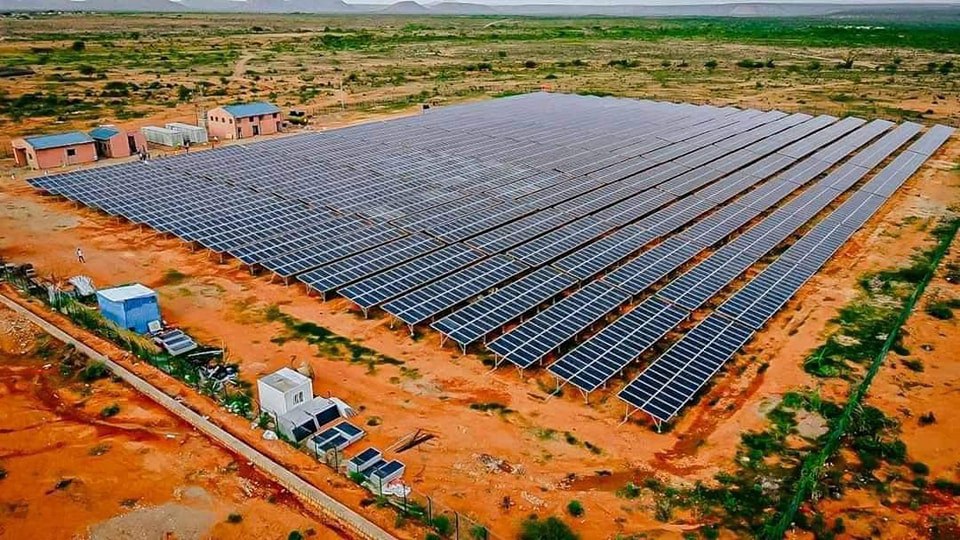
[Image 2: The largest solar grid in Bokolmayo, located in the Somali Regional State. Photo Credit: ena.et].
Urbanization in Ethiopia is growing fast. Therefore, through SDG 13, the government promotes climate-resilient urban planning. This means using green public transport, eco-friendly buildings, and sustainable waste management. Cities like Addis Ababa are actively testing these ideas to create healthier environments for future generations, showcasing Ethiopia’s commitment to climate action.
For example, pilot programs for electric public buses are reducing smog and improving air quality, making urban environments more livable for residents. In a landmark development in March 2025, the Addis Ababa City Administration introduced 100 electric buses to the capital’s transportation network. These zero-emission buses provide residents with faster, more comfortable commuting options while simultaneously addressing the city’s public transportation shortage. Ethiopia has ambitious targets to reach 500,000 electric vehicles nationwide within a decade, aiming to replace 95% of conventional fuel-powered vehicles by 2033.
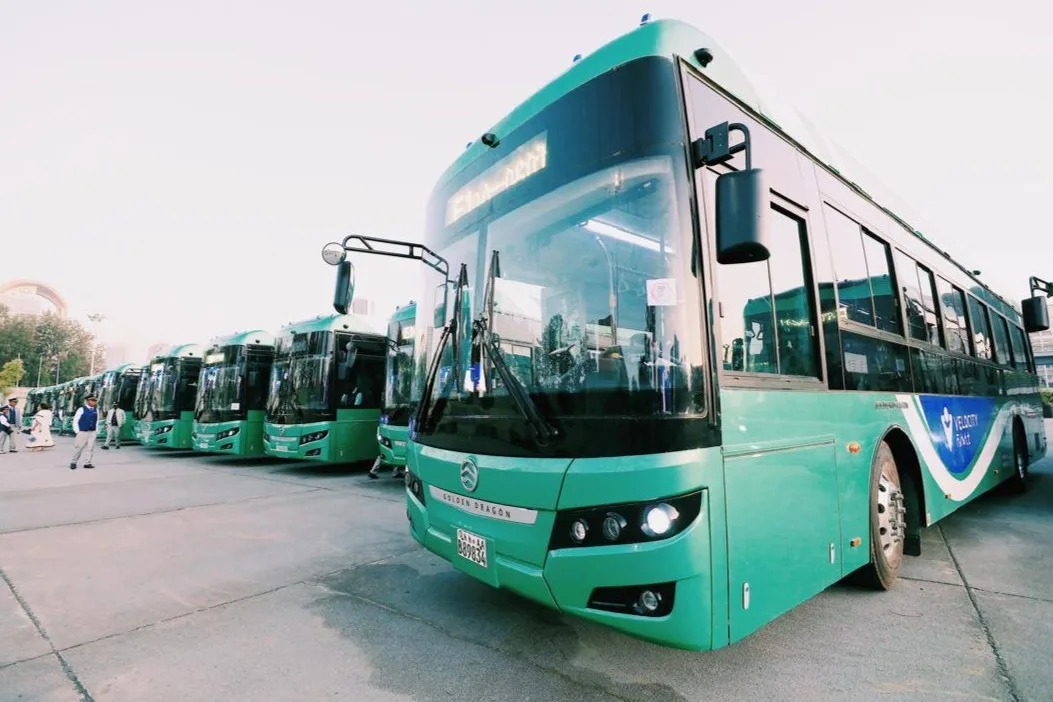
[Image 3: An electric public buses demonstrating sustainable urban development in Addis Ababa. Photo Credit: electrive.com].
Tackling climate change isn’t only the job of leaders—rather it’s a shared responsibility. Ethiopia’s climate action show that change is possible when we focus, act, and include everyone. From farmers to engineers, youth to government, every step matters. Ultimately therefore, SDG 13 is not just a goal—it’s a pathway to protect our future.
What climate actions are you most excited about, or what do you believe is the most crucial step for Ethiopia in its journey towards a sustainable future? Share your thoughts in the comments below!. For more information on safelight initiative’s ongoing projects, visit our official website here
References
• “Review on Development and Status of Drip Irrigation in Ethiopia.” International Journal of Advanced Research in Biological Sciences (IJARBS). https://ijarbs.com/pdfcopy/2022/july2022/ijarbs21.pdf
• “On-farm evaluation of drip irrigation system on coffee production in Western Oromia, Ethiopia.” CABI Digital Library. https://www.cabidigitallibrary.org/doi/pdf/10.5555/20230380370
• “Lighting Up Eastern Africa: How Greater Access to Energy is Creating Jobs and Improving Public Services in Rural Ethiopia.” World Bank. Published: January 24, 2025. https://www.worldbank.org/en/news/feature/2025/01/24/lighting-up-eastern-africa-access-to-energy-afe-rural-ethiopia
• “Ethiopia: Rural towns connected to energy supply via solar mini-grids.” ESI-Africa.com. Published: September 3, 2024. https://www.esi-africa.com/renewable-energy/solar/ethiopia-rural-towns-connected-to-energy-supply-via-solar-mini-grids/
• “Ethiopia’s Electric Vehicle Revolution: Driving Sustainable Transportation Forward.” VUKA. Published: April 25, 2025. https://wearevuka.com/insights/transport-logistics/ethiopias-electric-vehicle-revolution-driving-sustainable/
• “100 Golden Dragon Electric Buses Delivered in Ethiopia.” Bus-News. Published: April 9, 2025. https://bus-news.com/100-golden-dragon-electric-buses-delivered-in-ethiopia/
• “Addis Ababa launches 100 new electric buses.” TV BRICS. Published: April 6, 2025. https://tvbrics.com/en/news/addis-ababa-launches-100-new-electric-buses/
